
Burnham might back more drilling in the North Sea. Do the public?
The public just want cheaper bills, and will back investment in most sources, renewable or otherwise, that might deliver that.
Andy Burnham is expected to use his first days as Prime Minister to signal support for more North Sea oil and gas drilling.
We’re waiting for the detail and it’s far from clear whether the pledge amounts to a genuine change of direction or just a change of emphasis. But my question for this post is narrower: would the public back more drilling in the North Sea?
Better to drill here than elsewhere
Having done plenty of polling and focus groups on this, the short answer is broadly yes.
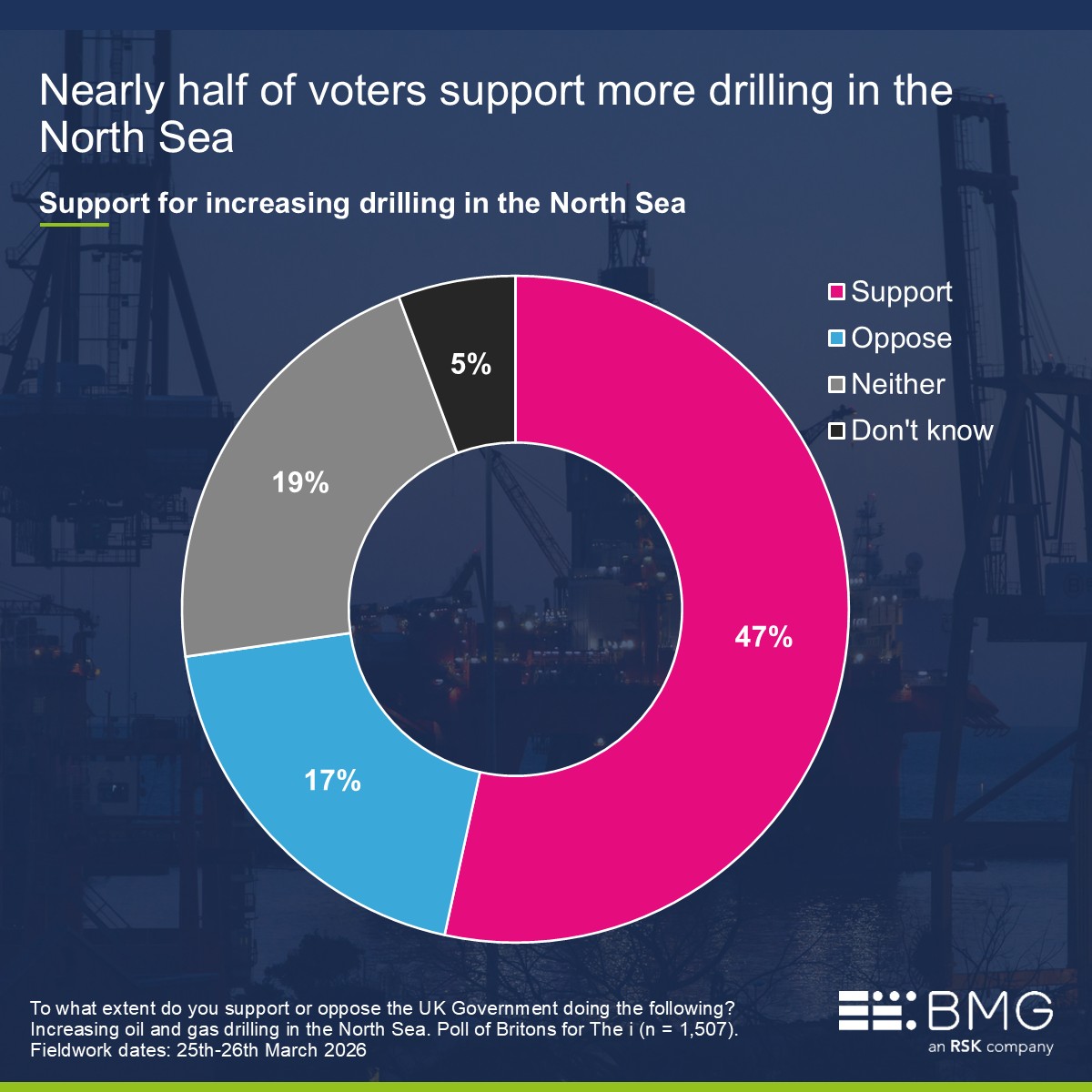
Our polling for The i earlier this year found support outnumbering opposition by nearly three to one: 47% backed more North Sea oil and gas drilling, with just 17% opposed.
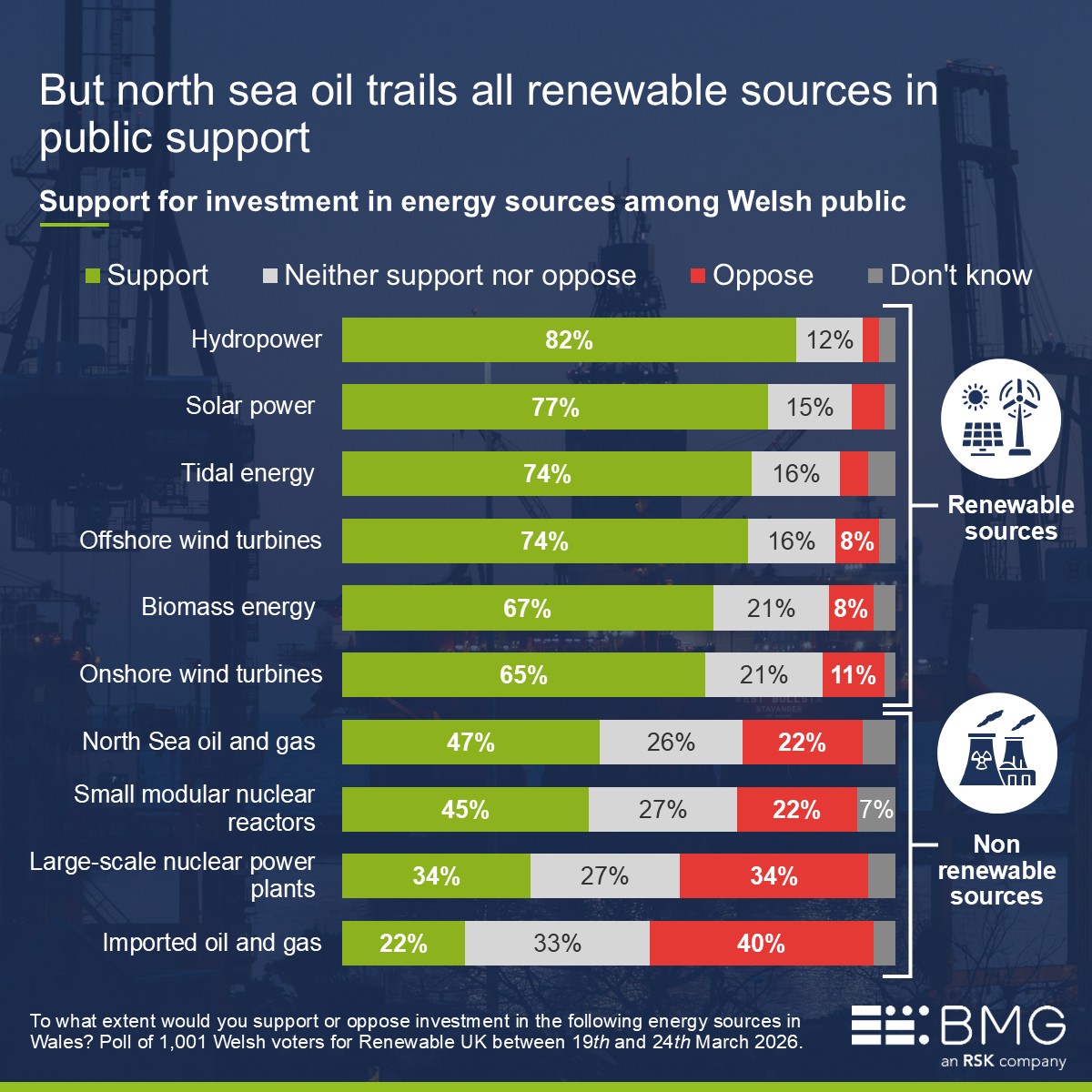
Part of what drives that support is how voters view the alternative way of accessing oil and gas. In separate work I did in Wales for RenewableUK Cymru, imported oil and gas was deeply unpopular, opposed by 40% and supported by just 22%.
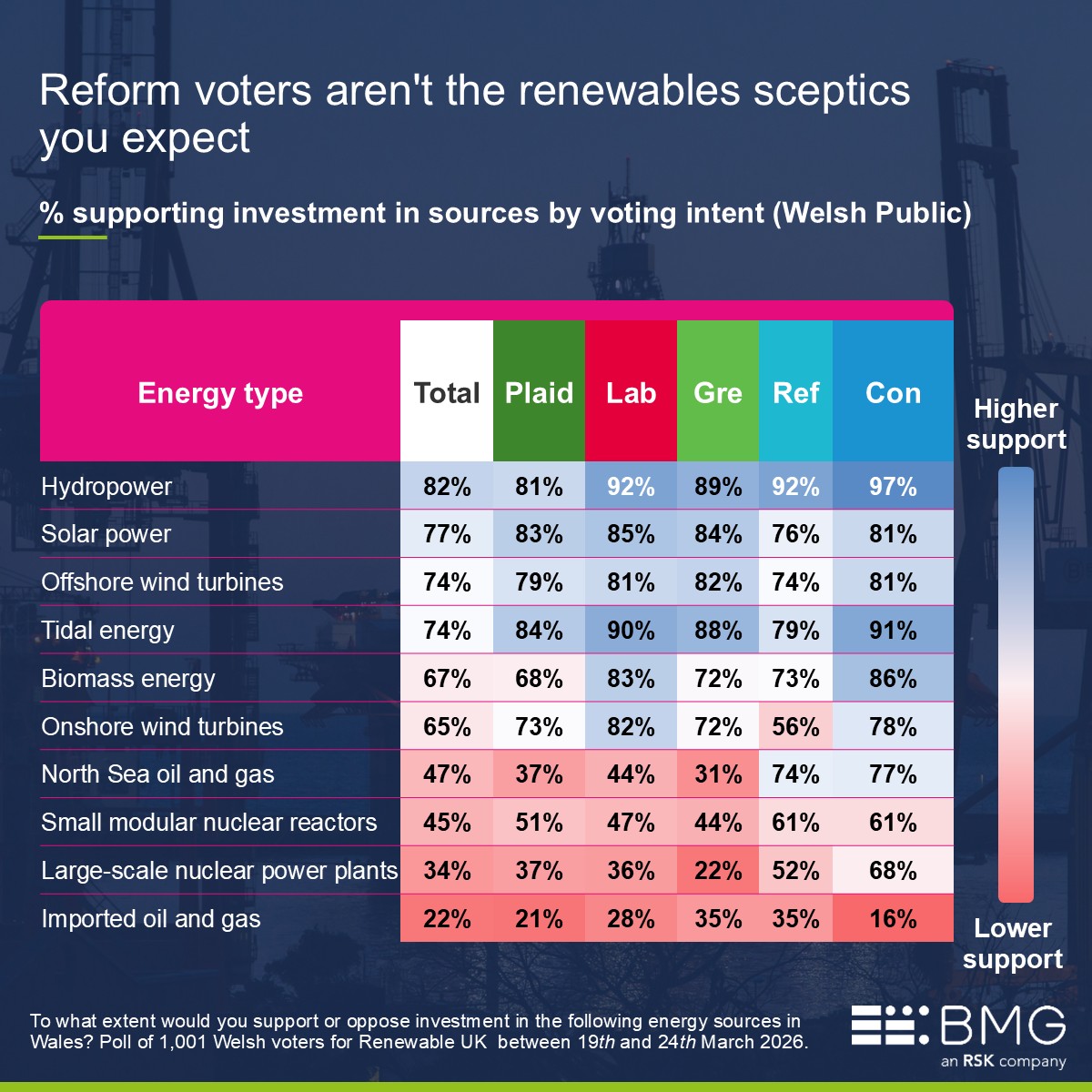
And this cuts across party lines: Green, Reform, Labour and Conservative voters were united in their lack of enthusiasm for imported energy.
Ultimately, voters want homegrown energy and are perplexed by the idea of importing oil when there’s North Sea supply to tap in our own back yard.
Renewables poll higher still
That’s not the whole picture, though. In general terms, what the public actually wants is more homegrown energy of all kinds – particularly renewables.
Ask about investment in renewables and support is higher still: supporters outnumber opponents by more than three to one. 52% are in favour against just 14% opposed.
And that’s when polled as “renewables” as a whole. In our polling in Wales, we found support climbs higher still once you ask about specific technologies: backing for more investment in hydropower reached 82% and solar 77%, while offshore wind and tidal both hit 74%. By contrast, support for North Sea oil and gas sits at 47%.
“Just lower the bloody bills”
Polling on specific energy sources has to be set against the bigger picture of what voters really care about.
Running focus groups on energy can feel like Groundhog Day. Try to have a conversation about any other energy matter, whether renewables, pylons or drilling, and most of the time it will find its way back to bills.
And no wonder. The renewables-versus-oil debate feels a long way from the costs people deal with every day. If more homegrown energy helps bring those costs down, whether renewables or oil and gas, voters are generally willing to get behind it.*
“Just lower the bloody bills.” That’s what one Welsh voter in a focus group told me after I pressed her on whether she backed more investment in renewables or oil and gas.
A pragmatic public
All this means that the culture-war framing of renewables versus oil and gas doesn’t generally reflect how voters think about it.
Take renewables. The caricature of the Reform voter flatly opposed to them sits uneasily with the numbers. Among those intending to vote Reform in Wales, support for renewables runs high: 92% backed more investment in hydropower, 79% tidal energy, 76% solar, and 74% offshore wind.
The same is true in reverse on oil and gas. Again, in our Welsh polling, we found plenty of voters from the emerging “left bloc” of parties backing North Sea drilling: 44% of Labour voters supported it, as did 37% of Plaid voters. While a minority, even 31% of Green voters say they would back doing so.
All this points to a public more pragmatic than ideological. Most reject the false choice so often drawn between renewables and oil and gas and instead want both.
So, if Burnham’s government goes down the road of more North Sea Drilling, there’s no reason he can’t take the public with him. But that’s if he keeps in sight of the thing they ultimately care about: getting their bills down.
*I’m conscious there’s a live debate here as to whether more North Sea oil would actually get bills down, with it argued that North Sea oil and gas would be sold on international markets. Again, a debate I’ll avoid and focus on the polling!